Werewolf Curse Infection
The Werewolf Mates Anthology (Erotic Romance)Werewolf Curse Infection is the means by which a bite passes the werewolf condition to a human, but the change does not announce itself plainly. Fever and coma-like sleep can resemble an ordinary illness; after waking, a newly infected person may feel well, or even unusually strong, without understanding what has happened. The decisive recognition is deferred until the full moon, when the condition’s supernatural and physical consequences become impossible to dismiss. Across Kelly, Wren, and Abigail’s experiences, infection is therefore not a single dramatic instant but a sequence of injury, misinterpretation, recovery, and revelation.
Transmission and Course
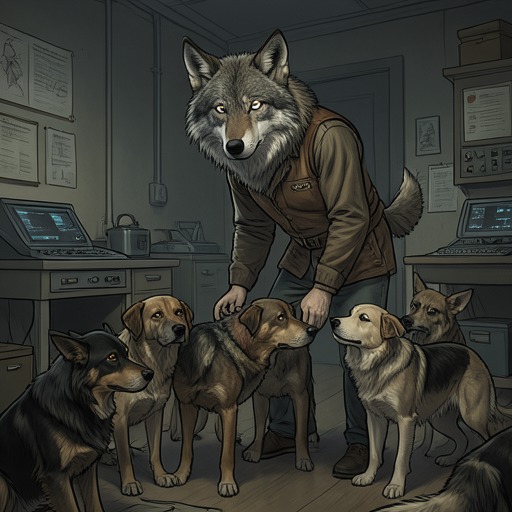
Max describes the condition to Kelly as an infection passed through a bite, usually when werewolves are in wolf form. The person bitten develops a fever and falls into a coma-like sleep, then wakes about a day later apparently as though nothing has happened. His explanation makes the process sound almost medically ordinary, but the apparent recovery conceals a fundamental change: the infected person is no longer simply human, even if neither symptoms nor self-understanding have caught up with that fact.
Kelly’s bite complicates Max’s account. He recognizes that he may have infected her accidentally, after his teeth did not feel normal; he wonders whether he had undergone a partial change, something he believed should be impossible without the complete control and concentration needed to shift. He does not know whether a human can be infected in that way. When he later explains the bite to Kelly, he emphasizes that it was an accident and admits that he has never heard of someone being turned under those circumstances. Her case thus exposes a gap between the usual account of transmission and what has happened to them.
The infection’s chronology also leaves room for mistaken explanations. The bite is followed not by immediate recognition but by sickness, sleep, and a return to apparent health. In Max’s account, the full moon is the point at which the hidden condition becomes legible: until then, an attacked person may not know anything has gone wrong. The delay distinguishes infection from a simple wound. A visible mark may fade while the more consequential change remains.
Symptoms and Misrecognition
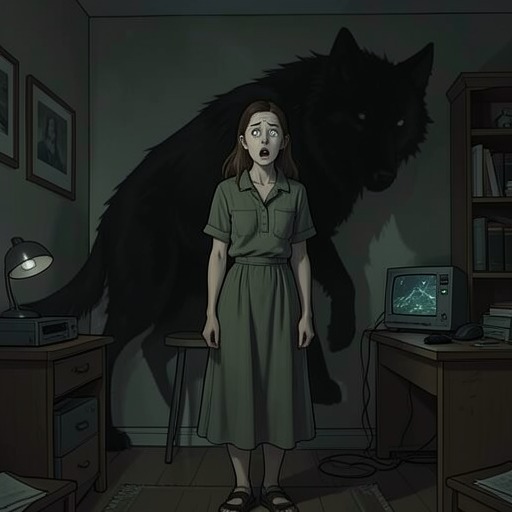
Kelly initially treats the mark on her neck as a severe hickey. On the morning of her first day at a new job, she covers it with concealer and foundation, then buttons a high-collared shirt to the top, choosing an ordinary explanation and an ordinary means of concealment. The mark is embarrassing, but it does not yet tell her that she has been infected. Her joking suspicion that the attacker might be a vampire is no closer to the truth than her assumption that the encounter was merely strange.
After a later sleep, Kelly wakes with her sheets tangled around her and a striking sense of energy. The vigor lasts only briefly before thirst takes over: she drinks a large glass of water, refills it, and realizes that she has slept through the day. In the bathroom, she finds that the mark has disappeared; rubbing her neck confirms it is not makeup residue. She attributes the rapid healing to antibodies fighting off what she thinks was a flu. The episode supplies evidence of an altered body, but Kelly interprets that evidence through familiar illness and recovery rather than recognizing infection.
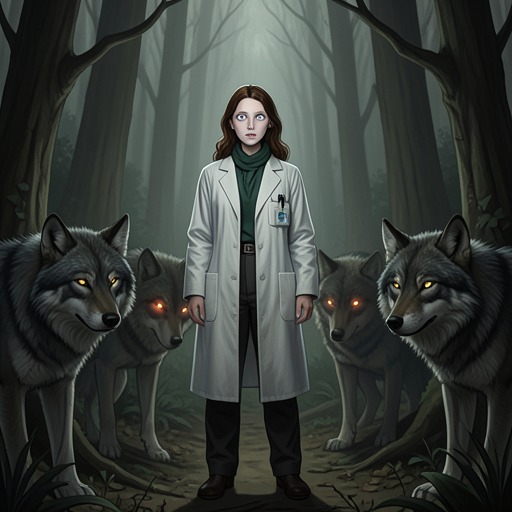
Wren’s experience makes the same pattern more consequential. A large dog attacks her while she is running through Central Park, and neither the police nor animal control can find it. She then becomes seriously ill and spends two days in a private hospital suite in a near-coma. A week after the attack, she feels not merely recovered but physically improved: she can run faster, see farther, and hear better than she remembers being able to before. These changes precede the full moon, which turns what might have seemed like an unusually thorough recovery into the beginning of a frightening discovery.
The Full Moon and Recognition
For Wren, the first full moon arrives in the worst possible setting: she is dining with investors in her family’s firm. She can barely remember what happened that night. The following morning she wakes in chains in the psychiatric ward of the same hospital where she had been treated for her illness. Only afterward does she learn about werewolves. The contrast between her nearly symptomless recovery and the public, coercive aftermath of the full moon shows how infection can remain hidden until it abruptly reorganizes a person’s life.
Max explains to Kelly that the full moon is not simply another occasion for transformation. Werewolves cannot change on that night; instead, the curse compels them toward a beast-like state. He describes the condition as an ancient curse that was later found to be transmissible, connecting the contemporary bite and its infection-like symptoms to a much older supernatural origin. Kelly’s sarcastic guesses about turning furry or attacking a family dog do not match the rule he gives her: the full moon is the one night when voluntary changing is impossible, even as the curse’s influence becomes most pressing.
This distinction separates infection from its later manifestation. The bite initiates the condition, but does not immediately give the newly infected person the knowledge or control to understand it. The full moon instead supplies the first unmistakable evidence, and it can do so in circumstances the person cannot choose or manage. Wren’s lost memory and confinement in the hospital make that cost especially stark; Kelly’s questions show her trying to turn a frightening disclosure into a set of rules she can grasp.
Different Lives After Infection
Kelly’s experience first reaches her through Max’s account: she had been sick for several days, and he says the illness followed the accidental bite. She resists the implication that a flu could have made her a werewolf, but Max describes the fever and coma-like sleep as the ordinary passage of infection. His explanation reframes symptoms she had already minimized. What she regarded as an isolated illness and a healing neck mark becomes part of a process with a delayed, life-changing consequence.
Abigail’s infection is recent when Kelly identifies it. Kelly tells her that the same thing happened to Abigail less than a week earlier, as well as to Kelly after she first moved to Boise and to Max when he was nineteen. Abigail rejects the diagnosis outright. Her response marks the distance between being infected and accepting a new identity: information from people who have experienced the change cannot immediately overcome her disbelief.
Over the following days, Abigail begins to adjust. She wakes at night disoriented by the fact that she is not in her own home, while Max and Kelly give her time to ask questions and explain why they can change into wolves and why they cannot do so on the full moon. They also explain her behavior with Jacob without judging her for it. A week after the infection is disclosed, they are in the woods behind Max’s house preparing to show her how to shift. Infection has therefore brought not only illness and involuntary consequences but a need for instruction, interpretation, and support from people who already know the condition.
Meaning and Consequences
The infection occupies an unstable space between biological illness and supernatural curse. Characters reach first for the explanations available to them: Kelly thinks flu and healing antibodies; Wren experiences a severe sickness followed by apparent recovery; Max calls the bite-transmitted process an infection while tracing its origin to an ancient curse. These accounts are not interchangeable, but together they describe why recognition comes late. The body offers familiar signs before the full moon reveals a condition that ordinary medical language cannot contain.
That delay has practical and social consequences. Wren’s infection leads from a private attack and hospital illness to a full-moon crisis in front of business investors, followed by waking in chains. Abigail’s account begins with sickness at work and later includes confinement, though the infection itself is not established as the reason for her captivity. Kelly’s transition is met by Max’s explanation and the guidance of people who can teach her what to expect. Their differing circumstances show that the infection does not dictate one uniform aftermath: recognition, safety, and support depend on where the person is when the hidden change becomes visible.
As a narrative concept, Werewolf Curse Infection turns a bite into a delayed revelation. The wound can pass, the mark can disappear, and the fever can be mistaken for flu; none of those apparent endings restores the person to the life they understood before. The full moon makes the concealed change legible, while the days between bite and recognition leave room for denial, fear, and explanation. The process binds physical symptoms to a new identity, making recovery from illness only the beginning of the transformation.